Here's how it works:
* Mechanical clocks: In a mechanical clock, the oscillator is usually a pendulum or a balance wheel. These components are set in motion by a source of energy, like a wound spring or weights, and their swinging motion is controlled by a regulator. This regulator adjusts the frequency of the oscillations, ensuring the clock keeps accurate time.
* Quartz clocks: In a quartz clock, the oscillator is a quartz crystal. This crystal vibrates at a very precise frequency when an electric current is passed through it. The vibrations are then amplified and used to control the clock's movement.
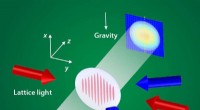
* Atomic clocks: These are the most accurate clocks and use the vibrations of atoms as their oscillator. These vibrations are extremely stable and can be used to measure time with incredible precision.
In all of these types of clocks, the oscillator is the key component that determines the clock's force and accuracy. The force of the clock is essentially the energy driving the oscillations, which in turn controls the speed at which time is measured.