1. Physical Tilting:
* Geological Tilting: Refers to the tilting of rock strata or landforms due to tectonic forces, erosion, or other geological processes.
* Mechanical Tilting: Describes the act of physically angling an object or structure. This can be used in engineering (tilting platforms, solar panels), or in everyday situations (tilting a chair).
2. Scientific Tilting:
* Cognitive Bias: In psychology, "tilting" can refer to a state of emotional distress or frustration that leads to irrational behavior or decision-making. This can be observed in games (like losing a game and getting "tilted") or in any situation where frustration is high.
* Statistical Bias: In statistics, "tilting" can refer to a situation where the data is not evenly distributed, leading to inaccurate results.
3. Tilting in Specific Fields:
* Astronomy: "Tilting" refers to the angle of a planet's rotational axis relative to its orbital plane (e.g., Earth's tilt causes seasons).
* Fluid Dynamics: "Tilting" can refer to the movement of fluid particles within a flow field, often in the context of turbulence.
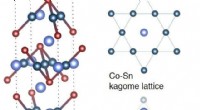
* Materials Science: "Tilting" might describe the alignment of molecules or crystalline structures within a material, impacting its properties.
To better understand the meaning of "tilting" in a specific context, please provide more information about the field or situation you are interested in.