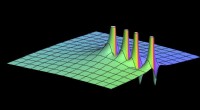
* Electric Fields: Charged particles create electric fields around them. These fields exert forces on other charged particles.
* Opposite Charges: The electric field lines from a positive charge point outward, while those from a negative charge point inward. This means that the field lines from opposite charges will converge.
* Attractive Force: When the field lines converge, they exert a force that pulls the oppositely charged particles towards each other.
Think of it like magnets:
* Opposite poles (N and S) attract.
* Like poles (N and N, or S and S) repel.
Examples:
* Atoms: The positively charged nucleus of an atom attracts the negatively charged electrons, holding them in orbit.
* Ionic Bonding: Oppositely charged ions (atoms that have gained or lost electrons) form strong bonds called ionic bonds.
* Static Electricity: When you rub a balloon on your hair, you transfer electrons. This creates a static charge, and the opposite charges between the balloon and your hair cause them to attract.
Key Points:
* The strength of the attraction between oppositely charged particles depends on the magnitude of the charges and the distance between them.
* The force between charges is described by Coulomb's Law.
* This attraction is essential for the formation of many structures in the universe, from atoms to stars.