Credit: CC0 Public Domain
(Phys.org)—Three teams working independently have found a nearly identical way to boost the resolution of quantum magnetic sensors, allowing frequency measurements with far higher precision than previous techniques. Two teams, one with ETH Zurich, the other based at Ulm University in Germany, have published their results in the journal Science. The third team working at Harvard has yet to publish their results, though they have uploaded a copy of their paper to the arXiv preprint server. Andrew Jordan with the University of Rochester in the U.S. has published a Perspective piece in the same Science issue outlining the work by the teams and notes the "multiple independent discovery," which is interesting in and of itself.
Quantum sensing has become an essential tool for physicists—it measures frequencies in a wide variety of applications. But as has been noted, because it must interact with the environment, degradation occurs. In this new effort, all three teams found the same way to increase the accuracy of such sensing using a classical clock.
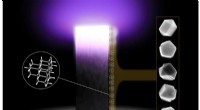
The improvement involved measuring a quantum qubit by studying defects in nitrogen vacancies (NVs) in a diamond—such vacancies have a magnetic spring, which makes them sensitive to a magnetic field. In this new effort, the researchers from the three teams isolated the NVs, allowing them to measure and manipulate them. They identified a means to enhance the response of the NV to a magnetic field, leading all three teams to improve their results by making repeated measurements at different time points while keeping track of how much time had passed—courtesy of an external clock to keep the measurements synchronized. This allowed for gathering more frequency information and hence improving accuracy. The researchers report improvements of nine orders of magnitude over previous methods.
The team in Germany took their work further by using their measurement technique to carry out NMR spectroscopy on a tiny sample of polybutene and discovered a problem—the molecules diffused past the NV centers, preventing improved resolution. But as it turned out, the Harvard team came up with a solution to the same problem—getting the technique to work on groups of NV centers in the same diamond.
© 2017 Phys.org