1. Archimedes' Principle: This principle states that an object immersed in a fluid (like air) experiences an upward buoyant force equal to the weight of the fluid displaced by the object.
* In the balloon: The hot air inside the balloon is less dense than the surrounding cooler air. This means the balloon displaces a larger weight of air than its own weight, creating a buoyant force that lifts it upwards.
2. Ideal Gas Law: This law describes the relationship between pressure, volume, temperature, and the number of molecules in a gas.
* In the balloon: Heating the air inside the balloon increases its temperature, causing the air to expand and take up more volume. This expansion, combined with the constant number of air molecules, reduces the air density inside the balloon, making it lighter than the surrounding air.
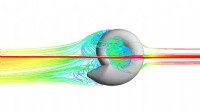
3. Bernoulli's Principle: This principle states that as the speed of a fluid (like air) increases, its pressure decreases.
* In the balloon: While not directly related to the primary lift mechanism, Bernoulli's principle applies to the balloon's shape and movement. The smooth, rounded shape of the balloon helps to direct airflow smoothly, reducing turbulence and maximizing lift.
4. Thermodynamics: This branch of physics deals with heat and its relation to energy and work.
* In the balloon: The burning of fuel in the burner heats the air inside the balloon, converting chemical energy to thermal energy. This heat transfer is essential for creating the difference in air density that drives the lift.
In summary: The hot air balloon exemplifies how basic physical principles like buoyancy, gas laws, and thermodynamics can be harnessed to create a surprisingly simple yet effective flying machine.