Here's a breakdown of key contributions:
* Ancient Greek philosophers (like Empedocles and Aristotle) believed light traveled instantaneously.
* Ibn al-Haytham (Alhazen) in the 11th century proposed that light travels at a finite speed, but he didn't attempt to measure it.
* Galileo Galilei in the 17th century tried to measure the speed of light using lanterns, but his experiment failed due to the limitations of his equipment.
* Ole Rømer in 1676 made the first successful measurement of the speed of light by observing the eclipses of Jupiter's moons.
* James Bradley in 1728 refined the measurement using the phenomenon of stellar aberration.
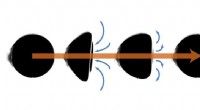
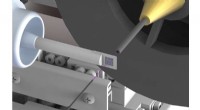
* Armand Fizeau in 1849 used a rotating toothed wheel to measure the speed of light more accurately.
* Léon Foucault in 1850 further improved the measurement using a rotating mirror.
* Albert Michelson conducted numerous experiments throughout his life to measure the speed of light with increasing precision, culminating in his famous experiment in 1926.
Therefore, there's no single inventor of the "theory of velocity of light". It's a culmination of contributions from scientists throughout history who gradually developed our understanding of the speed of light and its implications.