Here's a breakdown of some key areas within mechanics:
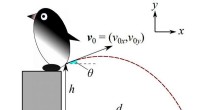
1. Kinematics: This focuses on describing the motion of objects without considering the forces causing that motion. It involves concepts like:
* Displacement: The change in position of an object.
* Velocity: The rate of change of displacement.
* Acceleration: The rate of change of velocity.
* Time: The duration of the motion.
2. Dynamics: This branch focuses on the relationship between motion and the forces that cause it. It involves key concepts like:
* Newton's Laws of Motion: These laws form the foundation of classical dynamics, explaining how forces affect the motion of objects.
* Force: A push or pull that can change an object's motion.
* Mass: A measure of an object's resistance to changes in motion.
* Momentum: A measure of an object's mass and velocity.
* Energy: The ability to do work.
3. Statics: This area deals with objects that are at rest or in a state of equilibrium, meaning the forces acting on them are balanced. It's crucial for understanding the stability of structures, bridges, and other objects.
4. Fluid Mechanics: This focuses on the behavior of fluids, both liquids and gases. It explores concepts like:
* Pressure: The force exerted by a fluid per unit area.
* Viscosity: The resistance of a fluid to flow.
* Buoyancy: The upward force exerted on an object submerged in a fluid.
5. Continuum Mechanics: This area deals with the deformation and flow of continuous materials, such as solids and fluids. It's crucial for understanding the behavior of materials under stress and strain.
6. Classical Mechanics: This is the traditional approach to mechanics based on Newton's laws of motion, which works well for objects moving at speeds much less than the speed of light.
7. Quantum Mechanics: This deals with the motion of particles at the atomic and subatomic levels, where classical mechanics fails. It describes the wave-like nature of particles and the probabilistic nature of their behavior.
8. Relativistic Mechanics: This deals with the motion of objects at speeds approaching the speed of light, taking into account the effects of Einstein's theory of relativity.
Mechanics is a vast and complex field with applications in various fields, including:
* Engineering (civil, mechanical, aerospace)
* Physics (astronomy, cosmology)
* Biology (biomechanics)
* Geology (geophysics)
* Meteorology
Understanding the principles of mechanics is crucial for understanding the world around us and for developing new technologies.