1. Classical Physics:
* Mechanics: The study of motion and its causes (force, mass, energy).
* Kinematics: Describes motion without considering its causes.
* Dynamics: Deals with the causes of motion, including forces and their effects.
* Statics: Deals with objects at rest or in equilibrium.
* Thermodynamics: The study of heat and its relation to other forms of energy.
* Thermometry: The measurement of temperature.
* Calorimetry: The measurement of heat.
* Statistical Mechanics: Applies statistical methods to explain thermodynamic phenomena.
* Electromagnetism: The study of electricity and magnetism and their interaction.
* Electrostatics: Deals with stationary electric charges.
* Magnetostatics: Deals with stationary magnetic fields.
* Electrodynamics: Deals with the interaction of electric and magnetic fields.
* Optics: The study of light and its behavior.
* Geometric Optics: Treats light as rays.
* Wave Optics: Describes light as waves.
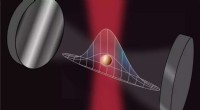
* Quantum Optics: Studies light at the quantum level.
* Acoustics: The study of sound and its behavior.
* Physical Acoustics: Deals with the physical properties of sound waves.
* Psychoacoustics: Studies how humans perceive sound.
* Fluid Mechanics: The study of fluids (liquids and gases) in motion.
* Hydrodynamics: Deals with the motion of liquids.
* Aerodynamics: Deals with the motion of gases.
* Fluid Statics: Deals with fluids at rest.
2. Modern Physics:
* Quantum Mechanics: Studies the behavior of matter and energy at the atomic and subatomic level.
* Quantum Field Theory: Describes the interactions of elementary particles.
* Atomic Physics: Studies the structure and properties of atoms.
* Nuclear Physics: Studies the nucleus of an atom.
* Particle Physics: Studies the fundamental particles that make up matter.
* Relativity: Deals with the relationship between space, time, gravity, and motion.
* Special Relativity: Applies to motion at constant velocity.
* General Relativity: Deals with gravity and accelerated motion.
* Astrophysics: Applies the laws of physics to celestial objects and phenomena.
* Cosmology: Studies the origin, evolution, and large-scale structure of the universe.
* Stellar Astrophysics: Studies stars and their evolution.
* Galactic Astronomy: Studies galaxies and their properties.
3. Interdisciplinary Fields:
* Biophysics: Applies physics to biological systems.
* Geophysics: Uses physics to study the Earth.
* Atmospheric Physics: Studies the atmosphere and its processes.
* Plasma Physics: Studies ionized gases.
* Materials Science: Studies the properties and applications of materials.
This is not an exhaustive list, and some fields can overlap. It is also important to note that new subfields of physics are constantly emerging.