Here's a breakdown of what happens:
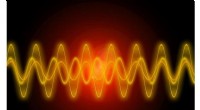
* Waves encounter an obstacle: When a wave encounters an opening or an object, it doesn't simply pass through or around it cleanly. Instead, the wave's energy spreads out and bends, changing its direction.
* Huygens' principle: This principle states that every point on a wavefront can be considered a new source of spherical wavelets. These wavelets interfere with each other, creating the diffraction pattern.
* Interference: The bending of the waves leads to interference patterns. When wave crests (high points) or troughs (low points) align, they reinforce each other, creating bright areas. When a crest and a trough align, they cancel each other out, creating dark areas.
Factors influencing diffraction:
* Wavelength of the wave: Shorter wavelengths diffract less than longer wavelengths. This is why you see less diffraction with visible light than with radio waves.
* Size of the obstacle or opening: The smaller the opening or obstacle compared to the wavelength, the more significant the diffraction.
Examples of diffraction:
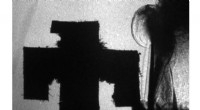
* Light passing through a narrow slit: You can see a pattern of bright and dark bands on a screen behind the slit. This is called a diffraction pattern.
* Sound waves bending around corners: This is why you can still hear someone talking even if they are hidden around a corner.
* Water waves passing through a gap in a barrier: You can see the wave crests spreading out and bending around the gap.
Applications of diffraction:
* Holography: Diffraction is used to create holographic images.
* X-ray diffraction: Used to determine the structure of crystals and molecules.
* Optical instruments: Diffraction plays a role in the operation of telescopes, microscopes, and other optical instruments.
Understanding diffraction is crucial for many scientific fields, from physics and chemistry to biology and engineering. It helps us understand the behavior of waves and how they interact with matter.