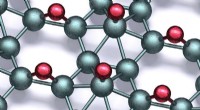
1. Disturbance: A mechanical wave starts with a disturbance, like a flick of a rope or a vibration in the air. This disturbance causes the particles in the medium to move from their resting positions.
2. Oscillation: The particles don't travel along with the wave, but instead oscillate (move back and forth) around their equilibrium positions. Think of a buoy bobbing up and down on the surface of the ocean: the buoy doesn't travel with the wave, but oscillates around its original position.
3. Transfer of Energy: As the particles oscillate, they transfer energy to their neighboring particles. This energy transfer happens through interactions like collisions between particles or through the tension in a medium like a rope.
4. Wave Propagation: This chain reaction of energy transfer causes the disturbance to propagate through the medium. The wave itself is not the movement of the particles, but the pattern of energy transfer that is transmitted.
Examples:
* Sound waves: Sound waves travel through air by causing air molecules to oscillate. The oscillations create compressions and rarefactions (areas of higher and lower pressure), which transfer energy through the air.
* Water waves: Water waves are a combination of transverse and longitudinal motion. The water molecules move in a circular path, but the wave itself travels horizontally.
* Waves on a string: Waves on a string are transverse waves, meaning the particles of the string oscillate perpendicular to the direction the wave travels.
Key takeaway: Mechanical waves don't carry matter along with them. They are simply patterns of energy transfer that travel through a medium by causing the particles of the medium to oscillate.