1. Atomic and Molecular Structure:
* Atoms: The fundamental building blocks of matter, composed of protons, neutrons, and electrons.
* Molecules: Two or more atoms bonded together.
* States of Matter: Solid, liquid, and gas represent different states of matter, determined by the arrangement and movement of particles.
2. Particle Motion:
* Kinetic Energy: Particles possess kinetic energy, meaning they are constantly in motion.
* Temperature: A measure of the average kinetic energy of particles. Higher temperature means faster movement.
* Diffusion: Particles move from areas of high concentration to low concentration.
* Brownian Motion: The random movement of particles suspended in a fluid, caused by collisions with surrounding molecules.
3. Interparticle Forces:
* Attractive Forces: Particles experience attractive forces that hold them together, such as:
* Van der Waals forces: Weak, short-range forces between all molecules.
* Hydrogen bonding: Stronger attractive force between molecules containing hydrogen bonded to highly electronegative atoms (like oxygen or nitrogen).
* Repulsive Forces: Particles also experience repulsive forces that prevent them from collapsing into each other.
* State of Matter and Forces: The strength of interparticle forces determines the state of matter. Strong forces lead to solids, weak forces to liquids, and very weak forces to gases.
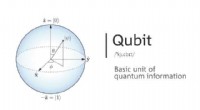
4. Quantum Mechanics:
* Wave-particle duality: Particles can exhibit both wave-like and particle-like properties.
* Quantized energy levels: Electrons in atoms can only occupy specific energy levels, leading to discrete energy transitions.
5. Statistical Mechanics:
* Probability distributions: Particle behavior is often described by probability distributions, reflecting the random nature of their movements.
* Thermodynamics: The study of energy transfer and its relationship to particle behavior at the macroscopic level.
Important Note: The behavior of particles can vary drastically based on their size, type, and the environment they are in. For example, the behavior of a single electron in a vacuum is vastly different from the behavior of a water molecule in a liquid solution.
In summary: The behavior of particles of matter is a complex and fascinating topic, driven by the interplay of forces, energy, and quantum mechanics. Understanding this behavior is essential for explaining the properties of materials and predicting their behavior under different conditions.