Here's why:
* Gravity's Constant Acceleration: The force of gravity acts on all objects equally, regardless of their mass. This means that every object experiences the same acceleration due to gravity (approximately 9.8 m/s² on Earth).
* Neglecting Air Resistance: In a vacuum, there is no air resistance to impede the fall of objects. This allows gravity to be the sole force acting on them.
The Myth of the Hammer and Feather:
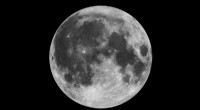
The famous demonstration of this principle is the Apollo 15 mission where an astronaut dropped a hammer and a feather on the Moon's surface. They fell at the same rate and hit the ground simultaneously, proving that in the absence of air resistance, mass doesn't affect the rate of freefall.
Why it Seems Different on Earth:
On Earth, air resistance plays a significant role. Lighter objects with larger surface areas are more affected by air resistance, making them fall slower than heavier objects with smaller surface areas. This creates the illusion that heavier objects fall faster.
In Conclusion:
In the absence of air resistance, all objects, regardless of their mass, fall at the same rate due to the constant acceleration of gravity. This principle is a cornerstone of our understanding of gravity and its effects.