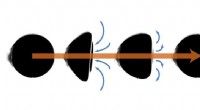
Here's why:
* The relationship between velocity, wavelength, and frequency: The fundamental equation that connects these three properties of a wave is:
velocity (v) = wavelength (λ) x frequency (f)
* Keeping wavelength constant: If the wavelength (λ) is held constant, the equation tells us that the velocity (v) is directly proportional to the frequency (f). This means:
* If velocity increases, frequency must also increase to maintain the equality.
* If velocity decreases, frequency must also decrease.
In simpler terms: Imagine a wave like a series of ripples on a pond. If the ripples start moving faster (increased velocity) but the distance between each ripple (wavelength) stays the same, there will be more ripples passing a given point per second (increased frequency).