Everyday Examples:
* Electricity: The flow of electrons through wires is due to the electromagnetic force. This force is responsible for powering our homes, electronics, and even our cars.
* Magnetism: Magnets attract and repel each other due to the electromagnetic force. This force is used in compasses, motors, and generators.
* Light: Light is a form of electromagnetic radiation. It allows us to see the world around us and is responsible for photosynthesis in plants.
* Radio waves: Radio waves, microwaves, infrared radiation, ultraviolet radiation, X-rays, and gamma rays are all examples of electromagnetic radiation.
* Friction: When two surfaces rub against each other, the electromagnetic force between the atoms in the surfaces causes friction. This force is responsible for the heat generated when rubbing your hands together.
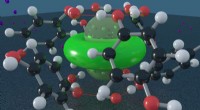
* Chemical bonds: The bonds that hold atoms together to form molecules are based on the electromagnetic force. This force is responsible for the structure of all matter.
More Complex Examples:
* Nuclear fusion: The electromagnetic force plays a role in nuclear fusion, the process that powers the sun and other stars.
* Particle interactions: The electromagnetic force is responsible for the interactions between charged particles, such as electrons and protons.
* Medical imaging: MRI (Magnetic Resonance Imaging) machines utilize magnetic fields to create detailed images of the inside of the body.
In essence, the electromagnetic force is everywhere around us, influencing everything from the smallest particles to the largest celestial objects. It's responsible for the light we see, the heat we feel, and the very existence of matter.