Core Concepts:
* Motion & Forces: Understanding how objects move and the forces that act upon them (gravity, friction, etc.).
* Energy: The ability to do work, its different forms (kinetic, potential, thermal), and how it's transferred.
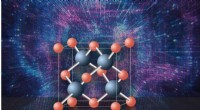
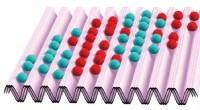
* Matter: The stuff the universe is made of, its properties, and how it interacts at the atomic and subatomic levels.
* Waves: Disturbances that transfer energy through a medium (sound, light, water waves).
* Thermodynamics: The study of heat and its relationship to energy and work.
* Electricity & Magnetism: The forces and phenomena related to electric charges and magnetic fields.
* Quantum Mechanics: The study of the very small, including particles, atoms, and the weirdness of the quantum world.
* Relativity: Einstein's theories of special and general relativity, dealing with space, time, gravity, and the universe at large.
* Cosmology: The study of the origin, evolution, and structure of the universe.
Key Tools & Methods:
* Mathematics: Physics relies heavily on math for describing phenomena, developing theories, and making predictions.
* Experimentation: Designing and conducting experiments to test hypotheses and gather data.
* Observation: Observing natural phenomena and collecting data.
* Modeling: Creating mathematical or computer models to simulate and understand complex systems.
* Scientific Method: A systematic approach to research and discovery.
Branches of Physics:
* Classical Mechanics: Deals with motion, forces, and energy in everyday situations.
* Electromagnetism: Studies the interaction between electric charges and magnetic fields.
* Optics: Focuses on light, its properties, and how it interacts with matter.
* Nuclear Physics: Explores the structure and properties of atomic nuclei.
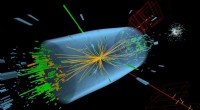
* Particle Physics: Studies the fundamental particles that make up matter.
* Astrophysics: Applies physics to celestial objects and the universe as a whole.
* Biophysics: Investigates the physical principles underlying biological processes.
Applications:
* Technology: Physics drives the development of many technologies, from electronics and computers to lasers and medical imaging.
* Engineering: Physics principles are essential for designing and building structures, machines, and systems.
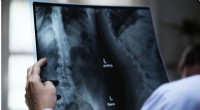
* Medicine: Physics contributes to medical imaging, radiation therapy, and many other medical applications.
* Environmental Science: Physics helps us understand climate change, pollution, and other environmental issues.
Notable Figures:
* Isaac Newton
* Albert Einstein
* Marie Curie
* Niels Bohr
* Stephen Hawking
Other Associations:
* Physics Education: Teaching and learning physics at all levels.
* Physics Research: Conducting experiments and developing new theories.
* Physics Societies & Organizations: Groups that promote and support physics.
* Physics Journals & Publications: Publications where physicists share their research findings.
These are just some of the many things associated with physics. It's a constantly evolving field with endless possibilities for discovery and innovation.