* Current is the flow of charge: In a circuit, current is the rate at which electrical charges (electrons) move through a conductor.
* Acceleration is a change in velocity: Acceleration applies to objects, including charged particles, and represents how their velocity changes over time.
Possible interpretations:
1. Changing current: "Accelerating current" might be a colloquial way of saying "changing current", referring to a current that is increasing or decreasing in magnitude over time. This is common in AC circuits, where current oscillates back and forth.
2. Accelerating charged particles: The term could potentially refer to situations where charged particles are accelerating within a conductor. This could happen in a few ways:
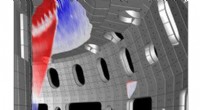
* Electromagnetic fields: Charged particles in a magnetic field can experience a force that causes them to accelerate in a circular path. This is the principle behind things like particle accelerators.
* Voltage changes: If the voltage across a conductor changes, the electric field within the conductor changes, which can cause the charged particles to accelerate. This is related to the concept of inductive reactance, which is a type of opposition to changing currents.
It's important to note:
* While "accelerating current" isn't a standard term, the underlying concepts are important.
* To understand a specific scenario, you need more context to determine what is meant by "accelerating current."
If you have a specific situation in mind, please provide more detail and I can help you understand it better.