* The Photoelectric Effect: Einstein's 1905 paper on the photoelectric effect is a cornerstone of quantum mechanics. It explained how light, and thus electromagnetic waves, behave as both waves and particles (photons). This concept is crucial for understanding the interaction of light with matter.
* Special Relativity: Einstein's theory of special relativity, also from 1905, showed that the speed of light in a vacuum is constant for all observers, regardless of their relative motion. This fundamental principle directly impacts how we understand the propagation of electromagnetic waves.
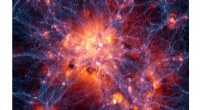
* General Relativity: While less directly linked to electromagnetic waves, Einstein's general relativity theory describes gravity as the curvature of spacetime. This theory has implications for the propagation of light, as it explains how gravity can bend light's path, a phenomenon known as gravitational lensing.
In essence, Einstein's work:
* Established the duality of light as both wave and particle: This is essential for understanding the behavior of electromagnetic waves.
* Demonstrated the fundamental nature of the speed of light: This constant speed is a defining characteristic of electromagnetic waves.
* Revealed the influence of gravity on light: While not directly about the mechanics of electromagnetic waves themselves, this impacts how we observe and understand them in the universe.
So, while Einstein didn't directly "discover" electromagnetic waves, his theoretical work provides the foundation for our modern understanding of their behavior and interaction with the universe.