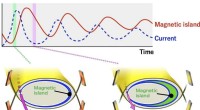
* Speed depends on the swing's arc: The speed of a swinging ball changes constantly. It's fastest at the bottom of its swing and slowest at the highest points.
* We need more information: To calculate the speed, we need to know either:
* The angle of the swing: How far does the ball swing from its starting point?
* The ball's energy: Do we know its kinetic energy at a specific point in its swing?
Here's how you could approach finding the speed with additional information:
1. Using the angle of the swing:
* Conservation of Energy: The ball's total mechanical energy (potential + kinetic) is constant. At the highest point of the swing, all the energy is potential. At the bottom, it's all kinetic.
* Potential Energy: PE = mgh, where:
* m = mass (0.5 kg)
* g = acceleration due to gravity (9.8 m/s²)
* h = height difference between the highest point and the lowest point. This is calculated using the rope length and the swing angle.
* Kinetic Energy: KE = (1/2)mv², where:
* m = mass (0.5 kg)
* v = speed (what we want to find)
2. Using the ball's kinetic energy:
* If you know the ball's kinetic energy at a certain point, you can directly solve for the speed using the kinetic energy equation (KE = (1/2)mv²).
Example:
Let's say the ball swings to a maximum angle of 30 degrees from the vertical.
1. Calculate the height difference (h):
* h = (1.5m) - (1.5m * cos(30°))
* h ≈ 0.23m
2. Calculate potential energy at the highest point:
* PE = (0.5 kg) * (9.8 m/s²) * (0.23 m)
* PE ≈ 1.13 J
3. This potential energy is equal to the kinetic energy at the bottom:
* KE = 1.13 J
4. Solve for speed at the bottom:
* 1.13 J = (1/2) * (0.5 kg) * v²
* v² ≈ 4.52 m²/s²
* v ≈ 2.13 m/s
Let me know if you have the angle or the ball's kinetic energy, and I can calculate the speed for you.