Here's why:
* Magnitude refers to the size or amount of the physical value. It's usually represented by a numerical value. For example, the speed of a car is 60 km/h, and the weight of an object is 10 kg.
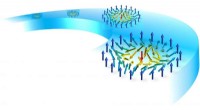
* Direction indicates the orientation or path of the physical value. It's often represented by a vector, an arrow pointing in a specific direction. For example, a car moving north has a direction, and a force acting upwards has a direction.
Examples:
* Velocity: A car traveling at 60 km/h *north* has both magnitude (60 km/h) and direction (north).
* Force: A force of 10 N *downwards* has both magnitude (10 N) and direction (downwards).
Physical values that have both magnitude and direction are called vector quantities. Some examples of vector quantities include:
* Velocity
* Displacement
* Acceleration
* Force
* Momentum
Physical values that only have magnitude are called scalar quantities. Some examples of scalar quantities include:
* Speed
* Distance
* Time
* Mass
* Temperature