Here's a breakdown:
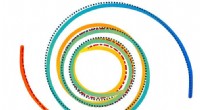
* Circular motion: Particles at the surface of the wave move in a circular path. They move upwards and forwards as the wave crest approaches, then downwards and backwards as the trough passes.
* Elliptical motion: Particles below the surface move in elliptical paths. The diameter of these ellipses decreases with depth, meaning particles deeper in the water move in smaller and smaller circles.
Key Points:
* No net displacement: While the particles move in circles or ellipses, they do not travel horizontally with the wave. They essentially return to their original position after a wave cycle.
* Energy transfer: It's important to remember that surface waves don't transfer matter, but they do transfer energy. The energy travels horizontally as the wave propagates, while the individual particles primarily move in a vertical and horizontal circle or ellipse.
Examples:
* Ocean waves: The familiar waves we see at the beach are surface waves.
* Ripples in a pond: These smaller waves also exhibit the same circular and elliptical motion of particles.
Visualizing the motion:
You can try to visualize this motion by imagining a floating object on a water surface as a wave passes by. The object will bob up and down and move slightly back and forth, but it won't be carried along with the wave itself.