Here are some examples of what people might mean by "sideways force":
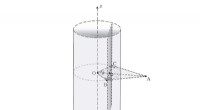
* Centripetal force: This force acts towards the center of a circular path, keeping an object moving in a circle. Since it's perpendicular to the object's motion (which is tangential to the circle), it could be considered a sideways force.
* Friction: Friction acts parallel to the surface of contact between two objects, opposing their motion. Depending on the situation, this could be considered a sideways force if the direction of motion is perpendicular to the surface.
* Air resistance: Air resistance acts opposite to the direction of motion of an object moving through the air. If the object is moving horizontally, the air resistance force would be acting vertically, which could be considered sideways.
* Normal force: This force acts perpendicular to a surface, preventing an object from passing through it. It could be considered a sideways force if the object is moving parallel to the surface.
It's important to note that "sideways force" is not a standardized term in physics. It's better to use more specific terms like "centripetal force," "friction," "air resistance," or "normal force" to describe the force in question.
When someone uses the term "sideways force," it's helpful to ask for clarification on what they mean. They might be referring to a specific type of force, or they might just be using a general term to describe a force that is acting perpendicular to something else.