* Light is a wave: Light doesn't travel in perfectly straight lines, but rather in waves. While we can approximate it as straight lines in many situations, this is a simplification.
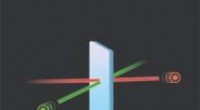
* Diffraction: Light waves spread out when they encounter obstacles or narrow openings, a phenomenon called diffraction. This means even the thinnest light ray will spread out to some degree, making it impossible to truly follow a perfectly straight path.
* Refraction: When light travels from one medium to another (like air to water), it bends. This further complicates the path of light.
However, we can use tools to simulate or track the path of light:
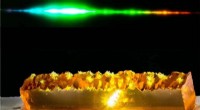
* Lasers: Lasers produce a very narrow beam of light, which can be used to approximate a straight line path over long distances.
* Optical fibers: These tiny strands of glass or plastic can guide light over long distances with minimal scattering.
* Collimators: These devices are designed to create a beam of light that is as parallel as possible, approximating a straight line path.
Ultimately, while we can't create a perfect straight line path of light, we can utilize these tools and techniques to approximate it for various applications.