* What we *do* know: Everything we can directly observe and interact with in our universe is made of particles. This includes everything from the smallest atoms to the largest stars.
* What we *don't* know: There are some theoretical concepts in physics that *might* exist without particles, but these are highly speculative and haven't been directly proven:
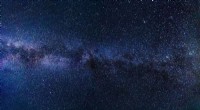
* The vacuum of space: Even the seemingly empty space between stars and planets isn't truly empty. It has energy fluctuations, virtual particles popping in and out of existence, and possibly other exotic phenomena we don't fully understand.
* Dark Matter/Dark Energy: These are mysterious components of the universe that don't interact with light, making them difficult to detect. We know they exist because of their gravitational effects, but their nature is unknown. Some theories suggest they might not be composed of particles in the traditional sense.
Important Note: It's important to remember that we are constantly learning more about the universe. What we consider "particle-less" today might be shown to be made of particles in the future.
The bottom line is that our current understanding of the universe is built on the idea that everything is made of particles. However, there are still many mysteries out there that might challenge this view.