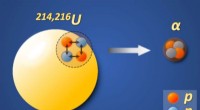
1. Fundamental Nature: Physics deals with the most fundamental aspects of the universe: matter, energy, space, and time. It seeks to understand the basic building blocks of the universe and how they interact.
2. Foundational for Other Sciences: Physics provides the foundation for many other sciences. Chemistry, biology, astronomy, and even fields like engineering and medicine rely on the principles of physics. For example:
* Chemistry: Atoms and molecules, the building blocks of chemistry, are governed by the laws of physics.
* Biology: The functioning of living organisms, from the movement of cells to the flow of blood, relies on physical principles.
* Astronomy: The formation of stars, planets, and galaxies are explained through the laws of physics.
3. Predictive Power: Physics allows us to predict how things will behave under certain conditions. This predictive power is crucial for developing new technologies and solving problems in various fields. For example:
* Engineering: Engineers apply physical principles to design and build structures, machines, and systems.
* Medicine: Medical imaging techniques, like MRI and X-ray, are based on physics.
4. Universal Applicability: The laws of physics are universally applicable, meaning they hold true regardless of location, time, or scale. This universality allows us to study and understand phenomena at vastly different scales, from subatomic particles to the cosmos.
5. Continued Discovery and Innovation: Physics is a constantly evolving field with new discoveries being made all the time. These discoveries not only expand our understanding of the universe but also lead to new technologies and applications.
In short, physics is a basic science because it provides the foundation for other sciences, has immense predictive power, applies universally, and continues to drive innovation and discovery.