Gravity as a Force:
* Gravity is a fundamental force of nature. It's the force that attracts objects with mass towards each other.
* The strength of this attraction depends on the masses of the objects and the distance between them.
Acceleration due to Gravity:
* What it is: Acceleration due to gravity (often denoted by 'g') is the acceleration experienced by an object falling freely under the influence of gravity alone.
* On Earth: Near the surface of the Earth, the acceleration due to gravity is approximately 9.8 m/s². This means that for every second an object falls, its downward velocity increases by 9.8 meters per second.
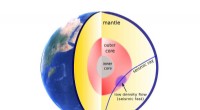
* Not Constant: The value of 'g' is not exactly the same everywhere on Earth. It varies slightly due to factors like altitude and the density of the Earth's crust.
Key Relationship:
* Gravity causes acceleration. A stronger gravitational force results in a greater acceleration.
* This means that if you drop an object, it will fall towards the Earth with an acceleration of approximately 9.8 m/s².
Examples:
* Falling Object: A ball dropped from a height accelerates downward due to gravity.
* Planets Orbiting the Sun: Planets are held in orbit around the Sun due to the gravitational force between them. This force causes the planets to constantly accelerate towards the Sun, keeping them in their elliptical paths.
In summary:
* Gravity is a force that pulls objects together.
* Acceleration due to gravity is the rate at which an object speeds up as it falls under the influence of gravity.
* The stronger the gravitational force, the greater the acceleration.