1. Particle Motion:
* Liquid: Particles in a liquid are relatively close together but can move around freely, constantly jostling and colliding with each other. This gives liquids their ability to flow.
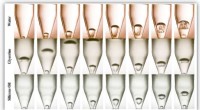
* Freezing: As the liquid cools, the particles lose energy. They move slower and vibrate less.
2. Attractive Forces:
* Liquid: In a liquid, the attractive forces between particles are strong enough to keep them close together but weak enough to allow movement.
* Freezing: When the temperature drops enough, the attractive forces between particles overcome the thermal energy (motion). This causes the particles to arrange themselves in a more ordered, fixed pattern.
3. The Solid State:
* Freezing: In a solid, particles are tightly packed and vibrate in fixed positions. They can't move freely, giving solids their rigidity and shape.
In Summary:
* Freezing is essentially a process of reducing the kinetic energy of particles. This allows the attractive forces to dominate, leading to a more ordered structure with lower mobility. The result is a transition from a free-flowing liquid to a rigid, fixed-shape solid.
Additional Notes:
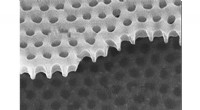
* Crystal Structure: The ordered arrangement of particles in a solid often forms a repeating pattern called a crystal lattice. This gives many solids their characteristic shape and properties.
* Exceptions: Amorphous solids, like glass, don't have a fixed crystal structure and their particles are arranged more randomly.
* Density: Usually, solids are denser than liquids because the particles are packed more closely together. However, water is a notable exception, where ice is less dense than liquid water. This is due to the unique crystal structure of ice.