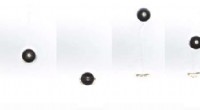
Here's why:
1. Air Resistance: Air resistance, also known as drag, is a force that opposes the motion of objects through the air. The amount of air resistance depends on the object's shape, size, and speed.
* Heavier objects: While gravity pulls on heavier objects with more force, they also have more inertia (resistance to change in motion). This means they're less affected by air resistance, especially at lower speeds.
* Lighter objects: Lighter objects experience a greater effect from air resistance relative to their weight. This means they slow down more than heavier objects.
2. Terminal Velocity: As an object falls, air resistance increases with speed. Eventually, the force of air resistance equals the force of gravity, and the object stops accelerating. This is called terminal velocity. Lighter objects reach terminal velocity sooner and at a lower speed than heavier objects.
Example:
Imagine dropping a feather and a bowling ball from the same height. The bowling ball will fall faster and hit the ground first because air resistance has less impact on it. The feather, however, will flutter slowly to the ground due to its larger surface area and light weight.
In a vacuum:
If you were to drop the feather and bowling ball in a vacuum (where there is no air resistance), they would fall at the same rate and reach the ground simultaneously. This is because the only force acting on them is gravity, and gravity accelerates all objects at the same rate regardless of their mass.
In conclusion:
While the statement that dropped objects of different masses reach the ground at the same time is often used as a demonstration of gravity, it's crucial to understand that this is only true in a vacuum. In air, heavier objects will generally reach the ground before lighter objects due to the influence of air resistance.