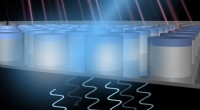
There are several types of scattering, but the key concept is that light interacts with the particles, causing it to deviate from its original path.
Here's a breakdown of some common types of scattering:
* Rayleigh Scattering: Occurs when light interacts with particles much smaller than its wavelength (e.g., air molecules). This is why the sky appears blue – blue light is scattered more than other colors.
* Mie Scattering: Occurs when light interacts with particles similar in size to its wavelength (e.g., water droplets in clouds). This is why clouds appear white.
* Tyndall Scattering: A special case of Mie scattering that happens when light is scattered by larger particles, creating a visible beam. You can see this when sunlight shines through a dusty room.
* Non-elastic Scattering: Involves a change in both direction and wavelength of light. Examples include Raman scattering and Compton scattering.
Why does light change direction?
The interaction between light and particles depends on the wavelength of light and the size and properties of the particles. The light can be:
* Absorbed: The particle takes in the light energy.
* Reflected: The light bounces off the particle.
* Refracted: The light bends as it passes through the particle.
* Scattered: The light is redirected in multiple directions.
The result of scattering depends on the type of scattering and the conditions:
* Blue sky: Rayleigh scattering of sunlight by air molecules.
* White clouds: Mie scattering of sunlight by water droplets.
* Sunsets: Rayleigh scattering removes blue light, making the remaining light appear red.
* Visibility: Scattering by dust and other particles limits how far we can see.
* Optical fibers: Light is guided through fiber optic cables by total internal reflection, which is a form of scattering.
So, in essence, scattering is a complex phenomenon with a range of effects. It plays a critical role in our understanding of light, color, and the world around us.