What is Reflection?
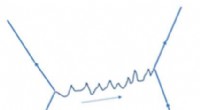
Reflection occurs when a wave encounters a boundary between two different mediums (like air and water, or air and a solid surface) and changes direction. This change in direction is governed by the law of reflection.
Types of Reflection:
* Specular Reflection: This occurs when a wave strikes a smooth surface, such as a mirror, and all the reflected waves travel in the same direction. This results in a sharp image.
* Diffuse Reflection: This occurs when a wave strikes a rough surface, such as a piece of paper. The waves are reflected in many different directions, resulting in a scattered or blurry image.
How it Works:
When a wave strikes a surface, it interacts with the molecules of that surface. This interaction causes the wave to change direction.
Key Concepts:
* Incident Wave: The wave that strikes the surface.
* Reflected Wave: The wave that bounces off the surface.
* Angle of Incidence: The angle between the incident wave and the normal (a line perpendicular to the surface).
* Angle of Reflection: The angle between the reflected wave and the normal.
Law of Reflection:
The law of reflection states that the angle of incidence is equal to the angle of reflection.
Examples of Reflection:
* Light waves: Light reflecting off a mirror, water, or a piece of paper.
* Sound waves: Sound bouncing off a wall, creating an echo.
* Water waves: Waves bouncing off a seawall or a rock.
Beyond Reflection:
While reflection is a common phenomenon, waves can also experience other interactions with surfaces, including:
* Absorption: The wave's energy is absorbed by the surface.
* Transmission: The wave passes through the surface.
* Refraction: The wave changes direction as it passes from one medium to another.
Let me know if you have any other questions about reflection or waves!