How Sound Travels in Solids:
* Types of Waves: In solids, sound can travel as both longitudinal and transverse waves.
* Longitudinal waves (compressional waves): The particles in the solid vibrate parallel to the direction the wave is traveling. This is similar to how sound travels in air.
* Transverse waves (shear waves): The particles in the solid vibrate perpendicular to the direction the wave is traveling. This is similar to waves on a string.
* Speed of Sound: Sound travels significantly faster in solids than in liquids or gases. This is because the molecules in a solid are much closer together and interact more strongly.
* Stiffness and Density: The speed of sound in a solid depends on the solid's stiffness (its resistance to deformation) and its density. A stiffer, denser material will allow sound to travel faster.
* Elasticity: The ability of a solid to return to its original shape after being deformed is called elasticity. This elasticity is essential for the propagation of sound waves.
Specific Characteristics:
* Two Wave Velocities: Unlike in liquids and gases, solids have two distinct velocities for sound waves:
* Longitudinal Wave Velocity (Vp): This is the velocity of the compressional wave. It is generally faster than the shear wave velocity.
* Transverse Wave Velocity (Vs): This is the velocity of the shear wave.
* Modes of Propagation: Sound waves can propagate in solids in various modes, including:
* Bulk waves: These travel through the entire volume of the solid.
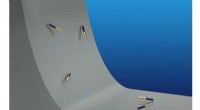
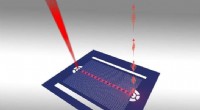
* Surface waves: These travel along the surface of the solid.
* Attenuation: Sound waves in solids experience attenuation, meaning they lose energy as they travel. This attenuation can be caused by factors like internal friction, scattering, and absorption.
Examples:
* Seismic waves: Earthquakes generate both longitudinal (P-waves) and transverse (S-waves) that travel through the Earth's solid layers.
* Metal structures: Sound travels quickly through metal structures, which is why you might hear noises from distant parts of a building.
* Musical instruments: The vibration of strings and the resonating chambers of instruments rely on the propagation of sound waves through solids.
Applications:
* Ultrasonic testing: Used to detect flaws and defects in materials.
* Seismology: Studying the Earth's interior by analyzing seismic waves.
* Non-destructive testing: Assessing the integrity of materials and structures.
Understanding how sound waves behave in solids is crucial for various applications, including engineering, materials science, and geophysics.