Here's a breakdown:
* Doppler Effect: A phenomenon where the observed frequency of a wave (like light or sound) changes depending on the relative motion between the source of the wave and the observer.
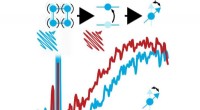
* Toward the source: If the object is moving towards the source, the wavelength appears shorter (higher frequency) – this is called a blueshift for light and a higher pitch for sound.
* Away from the source: If the object is moving away from the source, the wavelength appears longer (lower frequency) – this is called a redshift for light and a lower pitch for sound.
The Doppler effect is a fundamental concept in astronomy, physics, and even everyday life. It's used to:
* Measure the speed of galaxies: Redshift is a key indicator of how fast galaxies are moving away from us.
* Track weather patterns: Doppler radar uses the Doppler effect to measure wind speeds and direction.
* Detect speeding cars: Police radar uses the Doppler effect to determine a vehicle's speed.