Transparent Materials:
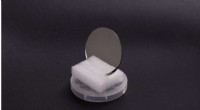
* Photons pass through: Transparent materials allow light to pass through them with minimal scattering or absorption.
* No interaction with electrons: The electrons in transparent materials are tightly bound to the atoms, meaning photons have difficulty interacting with them.
* Examples: Glass, water, air.
Opaque Materials:
* Photons are absorbed or reflected: Opaque materials either absorb photons or reflect them back.
* Strong interaction with electrons: Electrons in opaque materials are more loosely bound, allowing them to absorb photons and convert the light energy into heat or other forms of energy.
* Examples: Metals, wood, concrete.
Translucent Materials:
* Partial transmission and scattering: Translucent materials allow some light to pass through, but scatter the light in different directions.
* Intermediate interaction with electrons: The interaction between photons and electrons in translucent materials is weaker than in opaque materials, but stronger than in transparent materials.
* Examples: Frosted glass, parchment paper, clouds.
Key Factors:
* Atomic structure: The arrangement and bonding of atoms in a material influence its ability to interact with light.
* Electron configuration: The energy levels of electrons in a material determine how easily they can absorb photons.
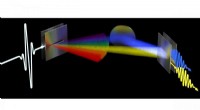
* Wavelength of light: The energy of a photon is determined by its wavelength. Different materials may be transparent to some wavelengths and opaque to others.
Beyond these basics:
* Metamaterials: These materials are engineered to have properties that don't exist in nature, including the ability to control the flow of light.
* Photonic crystals: These materials have a periodic structure that can control the propagation of light, leading to interesting optical phenomena.
In summary, the ability of a material to conduct light depends on how its atoms and electrons interact with photons. This interaction is influenced by factors like atomic structure, electron configuration, and the wavelength of light.