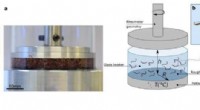
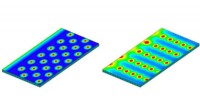
Both physical and mathematical models are used in simulations, but they differ significantly in their approach and application. Here's a breakdown:
Physical Models:
* Representation: A physical model is a scaled-down or simplified version of the real system, built with real materials. For example, a miniature car model in a wind tunnel.
* Advantages:
* Direct observation: Allows for visual observation and direct measurement of physical phenomena.
* Intuitive understanding: Provides a concrete representation that is easier to grasp for some people.
* Accurate for specific phenomena: Can be very accurate for specific physical aspects like fluid flow or structural behavior.
* Disadvantages:
* Limited scope: Can only represent a limited range of phenomena and conditions.
* Expensive and time-consuming: Building and testing physical models can be costly and take a lot of time.
* Difficult to modify: Changing the model requires physical modifications, which can be complex.
* Limited scalability: Difficult to scale to larger or more complex systems.
Mathematical Models:
* Representation: A mathematical model uses equations and algorithms to represent the system and its behavior. For example, a set of equations describing the motion of a projectile.
* Advantages:
* Wide applicability: Can represent a wider range of phenomena and conditions than physical models.
* Cost-effective and efficient: Simulations can be performed quickly and cheaply on computers.
* Flexible and modifiable: Easily adaptable to changes in the model or simulation parameters.
* Scalable: Can be applied to complex and large-scale systems.
* Disadvantages:
* Abstract: Can be difficult to visualize and understand for some.
* Requires expertise: Requires specialized knowledge in mathematics, programming, and the specific field of application.
* Can be inaccurate: The accuracy of the simulation depends on the quality of the model and the assumptions made.
* Can be complex to develop: Developing a comprehensive mathematical model can be time-consuming and challenging.
When to use which:
* Use physical models when:
* The system is relatively simple and well-defined.
* Visual observation and direct measurement are crucial.
* The cost of building and testing a physical model is justified by the need for accurate data.
* Use mathematical models when:
* The system is complex and requires a wide range of conditions to be explored.
* Cost-effectiveness and efficiency are paramount.
* Flexibility and scalability are required.
Combining both:
In some cases, combining both physical and mathematical models can be beneficial. For example, using a physical model to gather data for calibrating a mathematical model or using a mathematical model to simulate a specific aspect of a physical system.
Ultimately, the choice of model depends on the specific problem, the available resources, and the desired level of accuracy and detail.