Here's why:
* Light travels at different speeds in different mediums. The speed of light is fastest in a vacuum (approximately 299,792,458 meters per second). It slows down when it enters denser mediums like water, glass, or air.
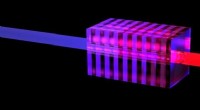
* Refraction: This change in speed causes light to bend as it enters a new medium, a phenomenon called refraction. This bending is what allows us to see objects through lenses and how rainbows form.
While the speed of light changes, its frequency (the number of waves passing a point per second) remains constant. This means the wavelength (the distance between two wave crests) changes to accommodate the new speed.