Fluids include:
* Liquids: Water, oil, mercury, etc.
* Gases: Air, oxygen, nitrogen, etc.
Why fluids exert pressure in all directions:
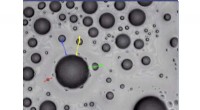
* Random Molecular Motion: Fluid molecules are in constant random motion. They collide with each other and with the walls of their container. This constant bombardment of the container walls creates pressure.
* Incompressibility of Liquids: Liquids are nearly incompressible, meaning their volume doesn't change much under pressure. This makes the pressure exerted by liquids distribute evenly in all directions.
* Free Movement of Gas Molecules: Gas molecules move freely and collide with each other and with the walls of their container. This constant bombardment creates pressure that is exerted equally in all directions.
Example:
* Water in a swimming pool: The water exerts pressure on all surfaces of the pool, including the bottom, sides, and the surface of the water itself.
* Air in a tire: The air pressure inside a tire is exerted equally in all directions, which is why the tire can support the weight of the vehicle.
Note: Solids, on the other hand, primarily exert pressure in the direction of the applied force. They are not as free-flowing as fluids.