Advantages of Technology in Physics:
* Enhanced Data Collection and Analysis: Modern instruments like telescopes, particle accelerators, and sophisticated sensors allow physicists to gather incredibly precise and detailed data, leading to more accurate measurements and deeper understanding of physical phenomena.
* Simulations and Modeling: Powerful computers can simulate complex physical systems, allowing researchers to explore scenarios that would be impossible or dangerous to experiment with in real life. This helps test theories and develop new models.
* Increased Accessibility and Collaboration: Online platforms and databases provide researchers with access to vast amounts of information and data, fostering collaboration and accelerating scientific progress.
* Improved Visualization and Communication: Technology allows for the creation of stunning visuals and animations that make complex physical concepts more accessible and engaging for researchers and the public alike.
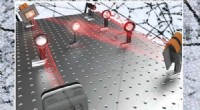
* Innovation in Experimentation: Advanced technologies like lasers, interferometers, and nanotechnology enable physicists to conduct experiments with unprecedented accuracy and control, pushing the boundaries of scientific knowledge.
Disadvantages of Technology in Physics:
* Cost and Complexity: Sophisticated technology can be expensive to develop and maintain, potentially limiting access for smaller research groups and institutions.
* Over-reliance on Technology: Excessive reliance on technology can lead to a lack of understanding of fundamental principles and analytical skills, hindering the development of new ideas and theoretical frameworks.
* Data Overload and Bias: The sheer volume of data generated by advanced instruments can be overwhelming and difficult to analyze without proper tools and critical thinking. Potential biases in algorithms and data analysis need to be carefully addressed.
* Ethical Considerations: The use of technology raises ethical concerns, especially in areas like artificial intelligence and genetic engineering, requiring careful consideration of potential risks and societal impacts.
* Technological Limitations: Even the most advanced technology has limitations, and physicists need to be aware of their inherent limitations to avoid drawing inaccurate conclusions.
Overall
Technology plays a vital role in modern physics, offering immense advantages for data collection, analysis, and communication. However, it's important to be aware of the potential downsides and ensure responsible use to maximize its benefits and minimize potential risks. A balanced approach that combines technological advancements with critical thinking and fundamental understanding is crucial for continued progress in physics.