* Force: A force is a push or pull that can cause an object to change its motion. It can:
* Start an object moving (like pushing a box across the floor)
* Stop an object that's already moving (like hitting the brakes in a car)
* Change the direction of an object's motion (like turning a steering wheel)
* Change the speed of an object (like pressing the gas pedal in a car)
Types of Forces:
* Contact forces: These forces require direct contact between objects. Examples include:
* Friction: The force that opposes motion between surfaces in contact (like rubbing your hands together).
* Normal force: The force that supports an object resting on a surface (like a book on a table).
* Applied force: A force applied directly to an object (like pushing a door open).
* Tension: The force in a stretched rope or string (like pulling a toy on a string).
* Non-contact forces: These forces act on objects without direct contact. Examples include:
* Gravity: The force of attraction between any two objects with mass (like the Earth pulling on you).
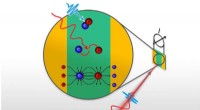
* Electromagnetic force: The force between electrically charged particles (like magnets attracting each other).
* Strong nuclear force: The force that binds protons and neutrons together in the nucleus of an atom.
* Weak nuclear force: The force responsible for radioactive decay.
Newton's Laws of Motion:
Sir Isaac Newton developed three laws of motion that explain how forces affect objects:
* First Law (Inertia): An object at rest will stay at rest, and an object in motion will stay in motion at a constant speed and direction unless acted upon by a net force.
* Second Law: The acceleration of an object is directly proportional to the net force acting on it and inversely proportional to its mass. (F = ma)
* Third Law: For every action, there is an equal and opposite reaction.
In summary, motion is caused by forces acting on an object. Understanding these forces and their effects is essential for comprehending the world around us.