1. Chemistry:
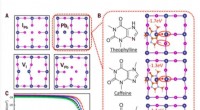
* Basis for chemical bonding: Physics explains how atoms interact through forces like electromagnetism, forming molecules and compounds.
* Quantum mechanics: Quantum physics provides the foundation for understanding chemical reactions and the behavior of electrons in atoms and molecules.
* Thermodynamics: The principles of heat transfer and energy transformation are crucial to understanding chemical reactions and processes.
2. Biology:
* Physical processes in living organisms: Physics explains how living organisms function, including blood flow, muscle contraction, and nerve impulses.
* Biomechanics: Physics principles are used to understand the mechanics of movement, the design of prosthetic limbs, and the study of human motion.
* Biophysics: This field bridges biology and physics, investigating biological systems using physical concepts.
3. Earth Science:
* Plate tectonics: Physics explains the forces that drive plate movement and the resulting earthquakes and volcanic activity.
* Climate change: Physics is crucial to understanding the effects of greenhouse gases and climate modeling.
* Astrophysics: This branch studies celestial objects and their interactions, using physics to understand their formation, evolution, and behavior.
4. Engineering:
* Engineering principles: Physics provides the foundation for all engineering disciplines, from civil engineering to electrical engineering.
* Materials science: Physics helps understand the properties of materials and their interactions with other materials.
* Computer science: Physics is involved in the development of computer hardware and software, including the physics of semiconductors and the design of optical fibers.
5. Medicine:
* Medical imaging: Physics is fundamental to technologies like X-ray imaging, MRI, and PET scans.
* Radiation therapy: Physics principles are used to target cancer cells with radiation.
* Biomechanics: Physics plays a crucial role in understanding the mechanics of the human body, designing prosthetics, and developing rehabilitation techniques.
6. Other Sciences:
* Psychology: Physics principles are used in the study of human perception and cognition, for example, in understanding how we perceive sound and light.
* Social Sciences: Physics concepts like network theory and statistical analysis are increasingly used in social sciences to analyze complex social systems.
In summary: Physics is the foundation upon which many other scientific fields are built. It provides a framework for understanding the fundamental laws of nature, which in turn allows us to explore and understand more complex phenomena in other fields.