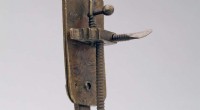
A gravimeter is an instrument used to measure the acceleration due to gravity at a specific location. This measurement, often expressed in milligals (mGal), is a key factor in understanding the Earth's internal structure, composition, and dynamics.
There are different types of gravimeters, but they all share the principle of measuring the force of gravity acting on a test mass. Here's a breakdown of how they work:
1. Absolute Gravimeters:
* These instruments measure the acceleration of a freely falling object in a vacuum chamber.
* They use a highly accurate atomic clock to measure the time it takes for a test mass to fall a specific distance.
* From this, the acceleration due to gravity can be calculated using the equation: g = 2d/t², where g is the acceleration due to gravity, d is the distance the mass falls, and t is the time it takes to fall.
* They provide the most accurate measurement of gravity, but are complex and expensive.
2. Relative Gravimeters:
* These instruments measure the difference in gravitational acceleration between two locations.
* They typically use a spring system, where the force of gravity stretches or compresses a spring.
* The amount of stretching or compression is proportional to the gravitational force.
* The spring's movement is measured using a very sensitive sensor (e.g., an optical sensor).
* They are less precise than absolute gravimeters, but are more portable and cost-effective.
Here's a simplified explanation for relative gravimeters:
1. A test mass is attached to a spring inside the gravimeter.
2. When the gravimeter is at a specific location, the spring stretches or compresses due to the force of gravity.
3. This stretching or compression is measured by a sensor.
4. The measured displacement is directly proportional to the gravitational force.
5. The sensor's readings are then compared to a known value to determine the difference in gravity between the current location and the reference point.
Applications of Gravimeters:
Gravimeters are used in a wide range of applications, including:
* Geophysics: Studying the Earth's interior, mapping geological formations, and detecting mineral deposits.
* Oil and Gas Exploration: Locating underground oil and gas reservoirs.
* Civil Engineering: Assessing the stability of structures and foundations.
* Geodesy: Measuring changes in the Earth's gravity field, which can be used to monitor changes in sea level, ice sheet mass, and other phenomena.
* Military Applications: Detecting underground tunnels and bunkers.
Summary:
Gravimeters measure the acceleration due to gravity, which provides valuable information about the Earth's composition and dynamics. While absolute gravimeters provide the most precise measurements, relative gravimeters are more portable and cost-effective, making them suitable for a wide range of applications.