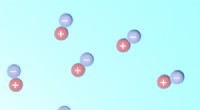
* Balanced Charges: Objects with balanced charges have an equal number of protons (positive charges) and electrons (negative charges). This means they are electrically neutral.
* Conservation of Charge: A fundamental principle in physics is the conservation of charge. This means that the total amount of electric charge in an isolated system remains constant.
Here's how charge buildup usually occurs:
1. Friction: When two objects are rubbed together, electrons can be transferred from one object to the other. This transfer creates an imbalance of charges, with one object gaining a net negative charge (excess electrons) and the other gaining a net positive charge (deficit of electrons).
2. Conduction: If a charged object touches a neutral object, electrons can flow from the charged object to the neutral object. This flow of electrons equalizes the charge distribution, but the neutral object now acquires a charge.
3. Induction: A charged object can influence the charge distribution of a neutral object without direct contact. This occurs because the electric field from the charged object repels or attracts electrons within the neutral object, creating a temporary separation of charges.
The key point is that charge buildup requires a net transfer of electrons, leading to an imbalance of charges. If two objects start with balanced charges, any movement of electrons must be balanced, preventing a charge buildup in both.