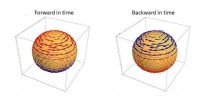
1. Reflection: This is the most common interaction. The wave bounces off the barrier and travels in the opposite direction. The angle of incidence (the angle at which the wave hits the barrier) is equal to the angle of reflection.
2. Diffraction: This happens when the wave encounters an obstacle with a size comparable to or smaller than the wavelength of the wave. The wave bends around the obstacle, spreading out and changing direction. The amount of diffraction depends on the wavelength of the wave and the size of the obstacle.
These two interactions often occur simultaneously, depending on the type of wave, the size and shape of the barrier, and the angle of incidence.