Fundamental Physics:
* Classical Mechanics: The study of the motion of objects and how forces interact with them. This includes topics like kinematics, Newton's laws of motion, work, energy, momentum, and rotational motion.
* Electromagnetism: The study of electric and magnetic fields and their interactions with charged objects. This includes topics like Coulomb's law, Faraday's law, Maxwell's equations, and electromagnetic waves.
* Thermodynamics: The study of heat, work, and temperature, and how they relate to energy and entropy. Key concepts include the laws of thermodynamics, heat transfer, and statistical mechanics.
* Quantum Mechanics: The study of the behavior of matter and energy at the atomic and subatomic level. This includes topics like wave-particle duality, quantization of energy, the uncertainty principle, and atomic structure.
* Relativity: The study of the relationship between space, time, gravity, and motion. It includes Einstein's special and general theories of relativity, which have revolutionized our understanding of the universe.
Applied Physics:
* Astrophysics: The study of celestial objects and phenomena, including stars, galaxies, planets, and black holes.
* Nuclear Physics: The study of the structure and properties of atomic nuclei, including radioactivity, nuclear reactions, and nuclear energy.
* Particle Physics: The study of fundamental particles and their interactions, including quarks, leptons, and the forces that govern them.
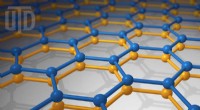
* Condensed Matter Physics: The study of the properties of solids and liquids, including their structure, bonding, and electronic properties.
* Biophysics: The application of physical principles to biological systems, including the study of cells, proteins, and DNA.
Other Areas:
* Fluid Mechanics: The study of the motion of fluids, including liquids and gases.
* Optics: The study of light and its behavior, including reflection, refraction, diffraction, and interference.
* Acoustics: The study of sound and its properties, including its generation, propagation, and reception.
* Materials Science: The study of the properties and behavior of materials, including their structure, processing, and applications.
Important Note: These are just the major components of physics. There are many other areas of study within these branches, and new ones are constantly emerging. The field of physics is vast and complex, and it continues to evolve as our understanding of the universe deepens.