1. Change in Speed:
* Light travels at different speeds in different materials. It moves fastest in a vacuum (the speed of light, denoted by 'c'), and slower in denser materials like water or glass.
* When light enters a denser medium, it slows down. Conversely, it speeds up when moving into a less dense medium.
2. Change in Direction:
* Due to the change in speed, light also changes direction when it crosses the boundary between two materials. This bending of light is called refraction.
* The amount of bending depends on the angle at which the light hits the boundary and the difference in the speed of light in the two materials (which is related to the refractive index of each material).
3. Other Effects:
* Reflection: Some of the light may also be reflected back at the boundary, depending on the angle of incidence and the materials involved.
* Dispersion: When white light (containing all colors) enters a material like a prism, different colors bend at slightly different angles, causing the light to be separated into a spectrum (like a rainbow).
Visual Example:
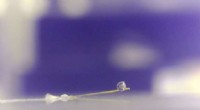
Imagine a straw placed in a glass of water. The straw appears bent at the water's surface. This is because the light from the straw travels through air (less dense) and then through water (denser). The light slows down in water and bends, creating the illusion of a bent straw.
Applications:
Refraction is the basis for many optical phenomena and technologies, including:
* Lenses: Used in eyeglasses, telescopes, microscopes, and cameras to focus light.
* Prisms: Used to split white light into its component colors.
* Fiber optics: Used in telecommunications to transmit information as light pulses over long distances.
Key Takeaway:
Refraction is the bending of light as it moves from one material to another due to a change in its speed. This phenomenon plays a critical role in our understanding of light and its interactions with matter.