Here's why:
* Newton's Law of Universal Gravitation: This law states that every particle in the Universe attracts every other particle with a force that is directly proportional to the product of their masses and inversely proportional to the square of the distance between their centers.
* Inverse Square Law: The "inverse square" part of the law means that as the distance between two objects increases, the gravitational force between them decreases rapidly. However, it never reaches zero. It simply becomes increasingly weaker.
* Earth's Mass: Earth has a large mass, meaning it exerts a significant gravitational pull. Even at great distances, this pull remains noticeable.
Practical Implications:
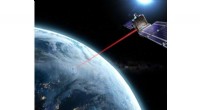
* Satellites: Satellites orbit Earth because they are constantly falling towards it due to gravity. However, their horizontal velocity keeps them from crashing into the planet.
* Moon's Orbit: The Moon orbits Earth due to the gravitational force between them. The distance is much greater than a satellite's orbit, but the force is still significant enough to keep the Moon in its path.
Conclusion:
While the gravitational force weakens with increasing distance, it never completely disappears. Therefore, there is no measurable height above the Earth's surface where the gravitational force becomes zero.