Gravity affects both solids and liquids equally. The force of gravity depends on the mass of an object. Both solids and liquids have mass and therefore experience gravitational pull.
The difference in how we perceive gravity's effect on solids and liquids is due to their different properties:
* Liquids are less rigid: They can flow and deform easily, making the effect of gravity more apparent. For example, water in a glass takes the shape of the container due to gravity.
* Solids are more rigid: They hold their shape, making the effect of gravity less visually noticeable. For example, a rock on the ground doesn't dramatically change shape due to gravity.
Here are some examples to illustrate the point:
* Water flowing downhill: Gravity pulls water downwards, causing it to flow.
* Lava flowing from a volcano: Gravity pulls molten lava downwards, creating flows and rivers of lava.
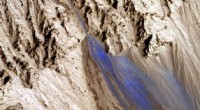
* A rock falling from a cliff: Gravity pulls the rock downwards, accelerating it until it hits the ground.
In conclusion:
It's not that gravity is stronger on liquids than solids, but rather the properties of liquids (fluidity) make the effects of gravity more obvious. Gravity affects both solids and liquids equally based on their mass.