Here's why:
* Newton's Law of Universal Gravitation: This law states that every particle in the Universe attracts every other particle with a force that is:
* Proportional to the product of their masses. This means the more massive the objects, the stronger the gravitational pull.
* Inversely proportional to the square of the distance between them. This means the farther apart objects are, the weaker the gravitational pull.
* Even small objects have mass: A dust particle, a grain of sand, even a single atom – they all possess mass and therefore exert a gravitational force.
However, the gravitational force exerted by objects with small masses is incredibly weak and practically undetectable in everyday life.
For a celestial object to have a noticeable gravitational effect, it needs to be significantly massive.
Here's why the gravitational force of celestial objects is more apparent:
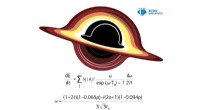
* Larger mass: Planets, stars, galaxies, and black holes have immense masses, leading to stronger gravitational fields.
* No competing forces: In the vastness of space, there are fewer objects nearby to counteract the gravitational pull of these celestial bodies.
So, while any object with mass exerts a gravitational force, it's the immense scale of celestial objects that makes their gravitational influence so powerful.