1. Large Masses: The more massive the objects are, the stronger their gravitational pull. This is why you feel the Earth's gravity strongly, but not the gravity of your friend standing next to you.
2. Small Distances: Gravity weakens rapidly with distance. The closer two objects are, the stronger their gravitational attraction. This is why you don't feel the Sun's gravity pulling you towards it, even though it's much more massive than the Earth.
3. Lack of Other Forces: In most everyday situations, other forces like friction, air resistance, or electromagnetic forces are much stronger than gravity. This is why a feather and a bowling ball fall at the same rate in a vacuum, but not in air.
In summary:
* Large masses lead to stronger gravitational forces.
* Small distances between objects amplify the gravitational pull.
* Absence of other dominant forces allows gravity to become noticeable.
Example:
The gravitational force between you and your friend is present, but it's extremely weak due to your relatively small masses and the distance between you. However, the gravitational force between the Earth and the Moon is very strong because of their large masses and proximity.
Here are some scenarios where gravitational forces are noticeable:
* Falling objects: The Earth's gravity pulls objects towards its center, causing them to fall.
* Tides: The Moon's gravity pulls on the Earth's oceans, causing tides.
* Orbiting planets: Planets orbit the Sun due to the Sun's strong gravitational pull.
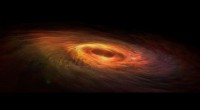
* Black holes: Black holes have such a strong gravitational pull that even light cannot escape.