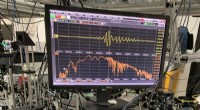
1. Empiricism: Science relies on observations and experiments to gather evidence. This means that scientific knowledge is based on what we can observe and measure, not on assumptions or beliefs.
2. Falsifiability: A scientific theory must be able to be proven wrong. If a theory cannot be tested and potentially disproven, it is not considered scientific. This principle helps to ensure that scientific knowledge is constantly being refined and improved.
3. Parsimony (Occam's Razor): When faced with multiple explanations for a phenomenon, the simplest explanation is usually the best. This principle encourages scientists to seek the most straightforward and elegant explanations, rather than unnecessarily complex ones.
It's important to note that these principles are not absolute rules, but rather guidelines that help to ensure the rigor and reliability of scientific knowledge.