Here's the breakdown:
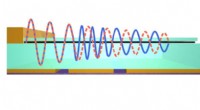
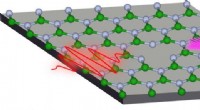
* Sound waves don't *transport* particles through the solid. Sound waves are pressure waves, meaning they cause compressions and rarefactions in the medium. Imagine a line of marbles. If you push one marble, it pushes the next, and so on. This is how sound travels through a solid – particles vibrate, but they don't travel long distances.
* Individual particles in a solid *do* vibrate quickly. The speed of these vibrations depends on the material. In solids, these vibrations are very fast, much faster than the speed of the sound wave itself. Think of it like a wave in a stadium. The wave travels quickly, but individual people only move a small amount.
* The speed of sound in a solid is generally very fast. This is because solids are tightly packed, allowing vibrations to transfer quickly from particle to particle. The speed of sound in steel, for example, is about 5,960 meters per second.
So, to answer your question:
* Individual particles in a solid vibrate quickly.
* The speed of sound in a solid is very fast.
* Sound waves do not move particles across large distances.
Let me know if you have any other questions!