Absolute Zero and Motion
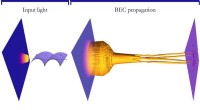
* Absolute Zero: This is the theoretical lowest possible temperature, defined as 0 Kelvin (-273.15 degrees Celsius or -459.67 degrees Fahrenheit). At this temperature, all particles would have their minimum possible energy.
* Quantum Mechanics: At absolute zero, there's still a tiny amount of energy called "zero-point energy." This means that even at absolute zero, particles wouldn't be completely still but would have a minimum level of vibration.
* Stopping All Motion: While the vibrations would be minimal, it's not technically accurate to say that all motion would completely stop.
Time
* Time and Absolute Zero: Time itself is not affected by temperature. It continues to flow even at absolute zero. The passage of time is not dependent on the movement of particles.
* Entropy and Time: One way to think about it is that the concept of "time" is linked to the progression of entropy (the increase in disorder). While motion would be severely limited at absolute zero, the universe would still be subject to the laws of physics, including the passage of time.
Key Points:
* Absolute zero is a theoretical limit where particles have minimal energy, but not complete stillness.
* Time is not affected by temperature and continues to flow even at absolute zero.
* The concept of "time" is more fundamental and independent of the motion of particles.
In Summary:
While absolute zero represents a state of extremely low energy, it doesn't mean that all motion stops or that time would cease to exist. Time continues to flow, and particles, even at absolute zero, retain a minimal level of energy.